
Technologies
Ing. Sascha Tobisch
Head of TECHNOLOGIES
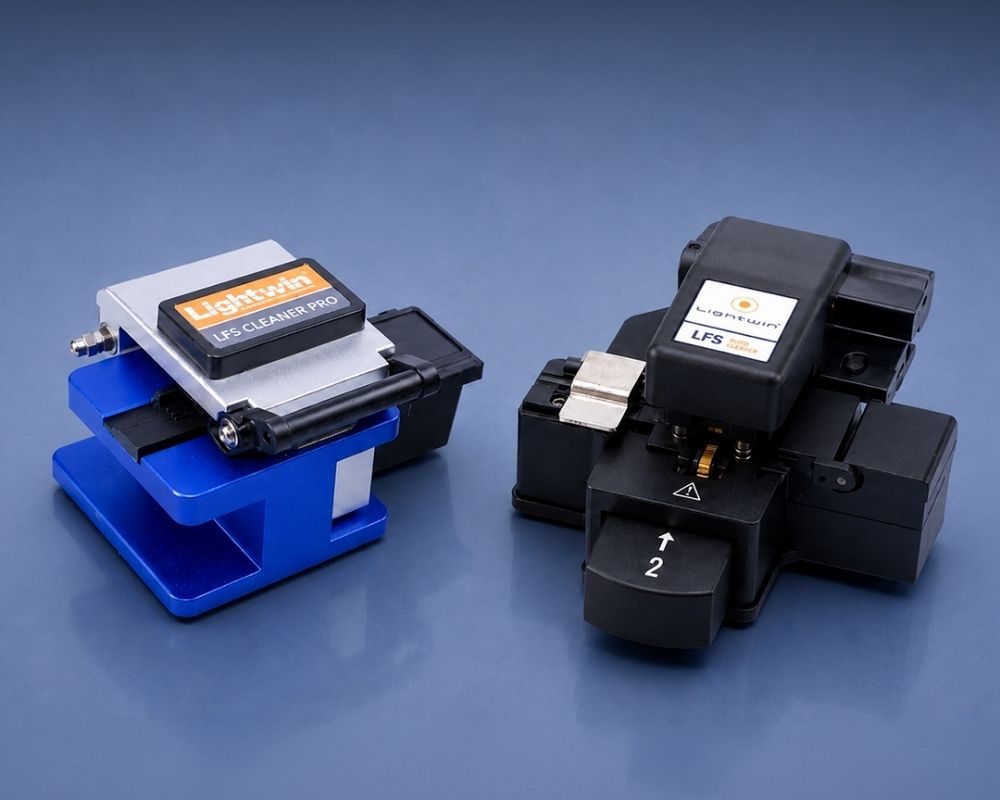
Anyone who regularly splices fibre optics knows the process: prepare the fibre, clean it, cleave it, and dispose of the fibre offcuts. While this is a quick task for a single fibre, larger splicing projects can involve hundreds of repetitive steps.
With the new LIGHTWIN LFS AUTO CLEAVER, LIGHTWIN expands its fibre optic portfolio with a cleaver designed to streamline multiple stages of the splicing process, replacing the previous Fibre Cleaver Pro.
More Than Just a Clean Cleave
When it comes to fibre cleaving, most attention is traditionally placed on the quality of the fibre end face. However, efficiency and workflow optimisation are just as important during everyday splicing operations.
The LFS AUTO CLEAVER features a one-step cleaving mechanism, automatically rotating the blade after each cleave. This ensures even blade wear and helps maximise blade lifespan.
In addition, fibre offcuts generated during the cleaving process are collected automatically, eliminating the need for separate handling and disposal.
Why Fibre Waste Management Matters
One area that is often underestimated in everyday splicing work is the handling of fibre offcuts.
Although these fibre fragments are extremely small, they can pose a safety risk. Glass fibre shards are sharp and can easily penetrate the skin if not handled correctly. For this reason, controlled collection and proper disposal of fibre waste are important aspects of safe fibre optic installation practices.
During larger projects, significant amounts of fibre waste can accumulate in a short period of time. The easier and more controlled the collection process, the safer and cleaner the working environment becomes.
Designed for Real-World Applications
Successful fibre splicing requires precision, concentration, and an organised workflow. Any tool that reduces unnecessary handling steps and helps maintain a clean work area can contribute to a more efficient installation process.
With its automatic blade rotation and integrated fibre waste collection, the LFS AUTO CLEAVER is designed not only to optimise the cleaving process itself but also to support the entire splicing workflow.
Focused on Workflow Efficiency
A successful cleave is more than just a clean fibre break. Efficient work processes, workplace organisation, and safe handling of fibre waste are equally important.
The LIGHTWIN LFS AUTO CLEAVER combines these requirements into a single tool, helping technicians focus on what matters most: achieving clean, reliable, and professional fibre optic splices.
TECHNOLOGIES NEWS
TECHNOLOGIES NEWS